 Series launch
THE RISK LEADER’S LENS
Introducing the series: leadership signals, blind spots and questions that turn risk insight into better decisions.
Read the full article ↗Start with a published issue, then use a discussion guide to connect its themes to your own institution. Each guide explains its purpose, the reasoning behind the question and the exact related reading.
Discussion guides offer a way to reason through a question; they are not answer keys. A justified response depends on your institution’s exposures, evidence and responsibilities.
Series launchIntroducing the series: leadership signals, blind spots and questions that turn risk insight into better decisions.
Read the full article ↗ Issue 01
How boards can test whether risk appetite shapes strategic decisions, rather than simply reporting limits.
Read the full article ↗ Issue 02
Why agreement in the boardroom must follow constructive challenge—and five ways leaders can make space for different views.
Read the full article ↗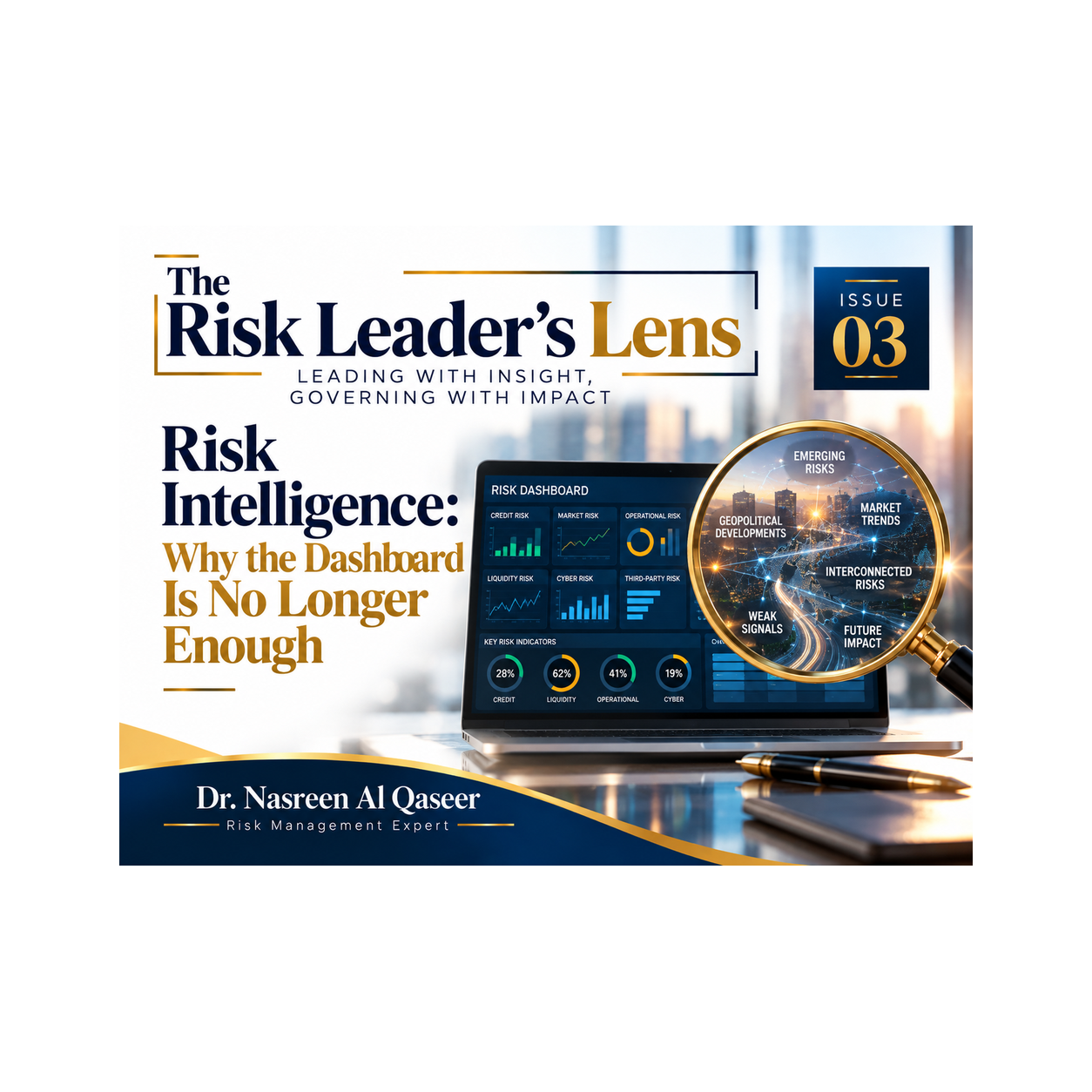 Issue 03
Connect weak signals, challenge assumptions and see the risk story beyond the dashboard.
Read the full article ↗ Issue 04
Five tests of whether governance influences decisions, escalation and accountability.
Read the full article ↗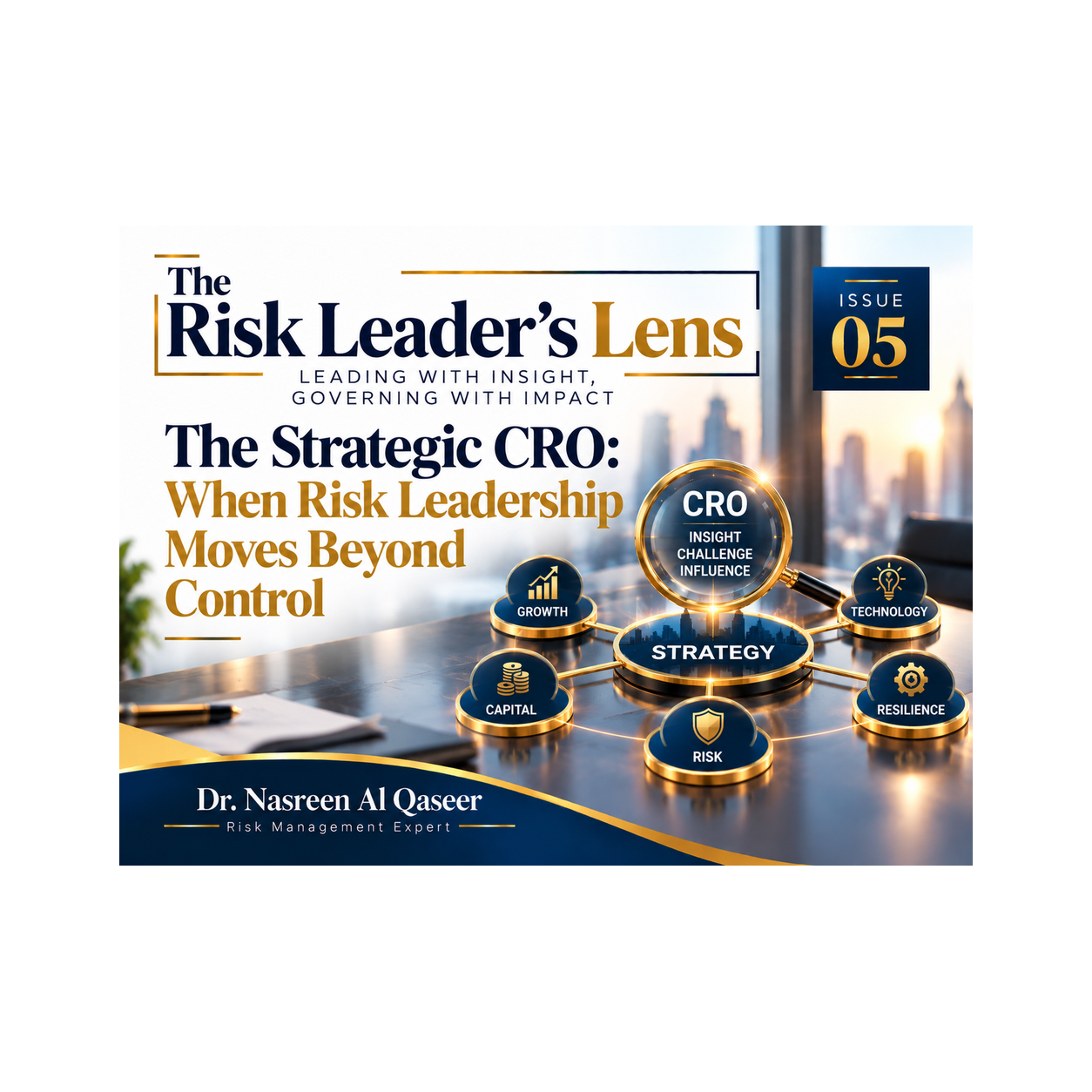 Issue 05
How chief risk officers can shape strategic decisions early while preserving their independence and ability to challenge.
Read the full article ↗These companion prompts were created for the website around the themes of the articles linked below. They are kept separate from the numbered published issues so readers can distinguish original articles from editorial discussion support.
Which connections between risks are missing from our leadership discussions?
Purpose: Map how one event can affect several risks, rather than reviewing each risk in isolation.
Article 12, “What makes geopolitical risk different from other risk types,” describes exposure mapping and scenario assessment. This question applies that approach to connected risks. This is an editorial discussion prompt, not a quotation or a separate published issue.
Choose one plausible disruption. Trace its effects on borrowers, funding, operations and counterparties. Identify the common exposure, responsible owners and the decision that would change.
Bring an exposure map and one combined scenario, with assumptions and management actions.
What would tell us that our assumptions are beginning to fail?
Purpose: Recognise when an assumption needs review while there is still time to act.
Article 14, “What liquidity risk frameworks need to reflect,” distinguishes leading digital and depositor signals from lagging financial metrics. This is an editorial discussion prompt, not a quotation or a separate published issue.
Name the assumption first. Select an observable warning signal, assign an owner and agree an escalation trigger and action. Check whether the warning arrives early enough for that action.
Bring an indicator trend, its threshold, the named owner and the time needed to respond.
What evidence would change our view of this risk?
Purpose: Test a preferred view with evidence that could challenge it.
Issue 02 examines constructive challenge in board discussions. Article 11, “What genuine model risk governance looks like,” provides a concrete example through independent validation and override monitoring. This is an editorial discussion prompt, not a quotation or a separate published issue.
State the current conclusion and the assumptions behind it. Ask for contradictory evidence, unresolved validation findings or an alternative scenario. Agree what evidence would justify revising the decision.
Bring an independent assessment, unresolved findings and a clearly stated decision criterion.
Does our appetite remain appropriate when multiple pressures occur together?
Purpose: Assess whether risk appetite still supports sound decisions when several pressures occur together.
Issue 01, “Look beyond individual limits” and “Test appetite under stress,” asks leaders to consider interacting risks and severe but plausible scenarios. This is an editorial discussion prompt, not a quotation or a separate published issue.
Assess the combined effect on capital, liquidity, concentration and service continuity. Compare the result with appetite and available headroom, then identify mitigation, escalation or a change in strategy.
Bring a combined stress scenario, remaining headroom and the options management would consider.
Where do common dependencies create concentration?
Purpose: Identify dependencies that look diversified individually but concentrate risk collectively.
Article 13, “What the governance framework needs to cover,” discusses risk-based partnership assessment, data governance and tested exit plans. This prompt extends that dependency view across relationships. This is an editorial discussion prompt, not a quotation or a separate published issue.
Map critical services to providers and significant sub-providers. Look for shared technology, infrastructure or geography. Test whether an alternative or exit plan would remain workable during a common disruption.
Bring a dependency map, critical-service impact assessment and evidence from an exit or continuity test.
Who owns risks that fall between established responsibilities?
Purpose: Make accountability explicit when a risk crosses organisational boundaries.
Article 13 explains the blurred boundary between a bank and a fintech and calls for clear accountability for customer outcomes. This is an editorial discussion prompt, not a quotation or a separate published issue.
Follow a customer journey or critical process across hand-offs. Assign one accountable owner for each outcome, supporting responsibilities and an escalation route. Test who acts when an incident crosses teams or organisations.
Bring an accountability map, escalation route and a worked incident example.